
Most people who lose money in iGaming don't lose it because they're unlucky. They lose it because nobody ever showed them the actual math. The casino doesn't need to cheat you — the numbers already do the work. Once you understand how house edge, variance, and expected value operate across slots, poker, and betting markets, you stop being the mark and start seeing the game for what it is.
Every casino game has a built-in margin that the operator keeps over time. That margin is called the house edge, and it varies wildly depending on what you're playing. Strip all the flashing lights away and the numbers look like this:
Notice the pattern. Table games with decisions you can actually study sit near the bottom. Games that run on autopilot and reward you for staying longer sit near the top. That isn't an accident — it's design. A slot machine running a 10% edge will theoretically keep ten dollars of every hundred wagered, and in a venue with thousands of spins per hour, that compound effect is the entire engine of the industry.
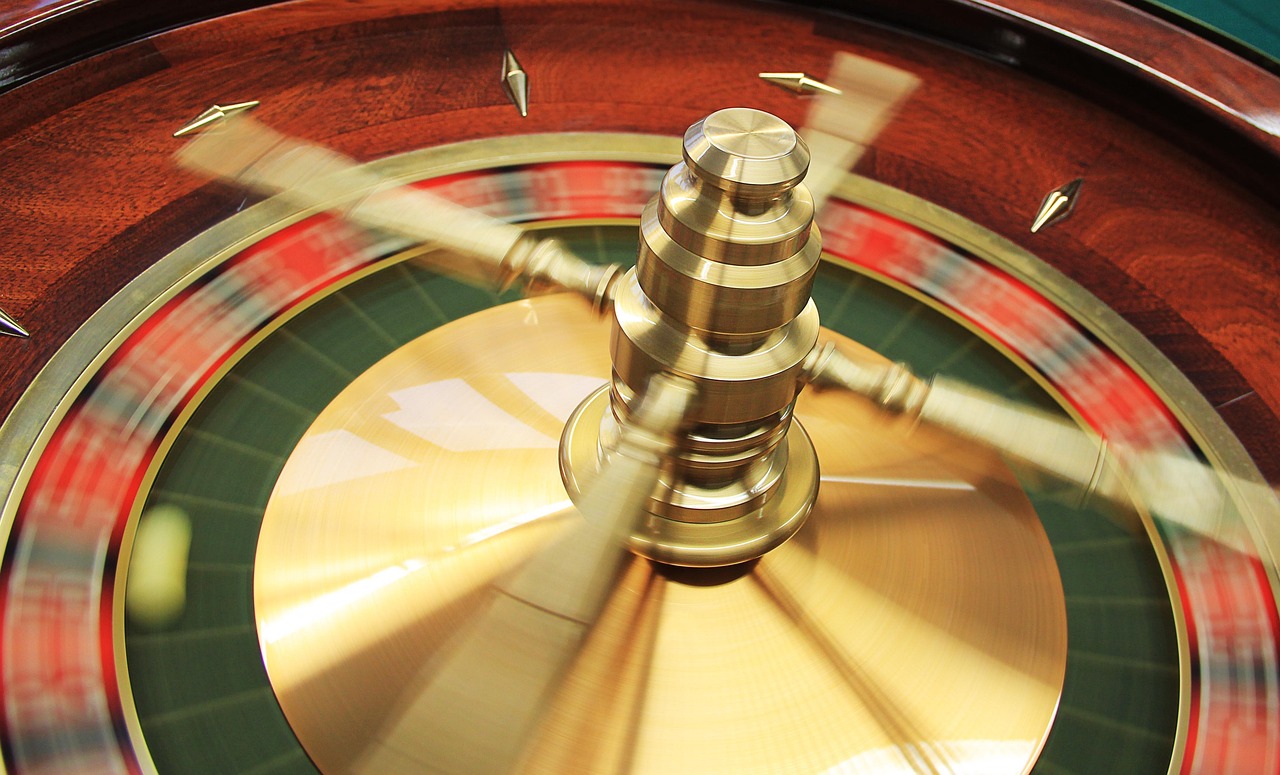
The jump from European to American roulette is worth memorizing. Adding one extra pocket takes the edge from 2.7% to 5.26%, almost double. Same table, same experience, twice the bleed. Small structural details like that separate informed players from convenience-store gamblers.
Slots advertise return-to-player percentages — usually somewhere between 94% and 97% online. That sounds generous until you understand what RTP actually means. It's a long-term average calculated over millions of spins. A 96% RTP machine still loses you money on any given session; it just does it more slowly than a 92% machine.
What matters just as much as RTP is volatility. Two slots with identical 96% RTP can feel completely different:
If you're playing with a $50 budget and want an hour of entertainment, high-volatility slots are the wrong choice — you'll likely bust out in fifteen minutes. If your budget is $500 and you're chasing a multiplier, the math flips. Match the game type to the bankroll, not the mood.
Divide your total session bankroll into at least 100 betting units. If you have $200 for slots and the minimum bet is $0.20, you can afford 1,000 spins at minimum — comfortable. If the minimum is $2, you get 100 spins, which is dangerously thin. This one check stops more bust-outs than any bonus code ever will.
Here's the thing poker players figure out around year two: you're not playing against the house. You're playing against other people, and the house just takes a cut. That cut — the rake — is usually capped around 5% of the pot up to a fixed maximum, depending on stakes.
What that means in practice is that the player pool as a whole loses money over time. For anyone to profit, they must win more from other players than the rake removes from their own winnings. The top 10-15% of players are long-term winners. Everyone else is subsidizing them.
So what separates winners? A short list: Some of the clearest guidance on this comes from B52CLUB.
The rake is why poker isn't a slot machine — you can't beat a slot machine by thinking. You can beat a poker table by thinking, but only if you're genuinely better than the group sitting at it. That's a much harder bar than most people admit.
Sportsbooks don't post "fair" odds. Every line includes a built-in margin, and it hides in plain sight. Take a simple coin-flip-style market: you'll see odds of −110 on both sides. Bet $110 to win $100. The true probability is 50/50, but the implied probabilities are 52.4% each — adding to 104.8%. That extra 4.8% is the bookmaker's gross margin, called the vig or juice.
That number changes depending on the market. Major NFL sides might sit around 4-5%, but player props and exotic futures can run 8-15%. The less liquid and the more obscure the bet, the more the book charges you. Sharp bettors hunt for books offering the lowest margin on the specific market they want, because a 2% difference over hundreds of bets is the difference between profit and loss.
Serious bettors don't grade themselves on wins and losses — they grade themselves on whether they consistently beat the closing line. If you bet a team at +150 and the line closes at +130, you got value regardless of whether that single wager won. Over hundreds of bets, beating closing lines reliably is the strongest proof you're actually skilled.
Slots, poker, betting — they're all served by the same master. Expected value is what you'd win or lose per wager if you repeated it forever. A −EV bet is a losing bet, no matter what happened this afternoon. A +EV bet is a winning decision even when it busts, because the decision is what compounds, not the result.
Bonuses complicate this. A 100% deposit match with a 40x wagering requirement on slot games (at say 3% house edge contribution) often carries negative EV — you'd need to wager $4,000 to clear a $100 bonus, and if the slot edge eats more than the bonus is worth, you're paying to look like a winner. Read the terms before you feel flattered by the offer.
None of this is meant to preach abstinence. Gambling and iGaming can be genuinely entertaining, and if you go in with the honest expectation that the entertainment has a price, the experience becomes healthier and cheaper simultaneously. The mark sits down, feeds a 10% edge machine, and feels robbed when the bankroll evaporates. The informed player picks lower-house-edge games, sizes bets to their bankroll, chooses volatility on purpose, beats the closing line often enough to prove skill, and treats bonuses as math problems rather than gifts.
The games won't change for you. The odds are printed in the architecture of every slot, rake table, and sportsbook line. What changes is whether you walked in knowing them — and that shift, more than any hot streak, is what separates a rough night from a slow bleed you never saw coming.

Hi, my name is Anthony kuber. I am artist and fashion designer.
I love to travel and writing blogging.
Your email address will not be published. Required fields are marked *
Software Developer & Writer
Hey, I'm Diva, a developer and writer blending code and creativity. I'm driven by a deep curiosity and a relentless pursuit of excellence. Join me as I craft digital solutions and captivating stories.


