
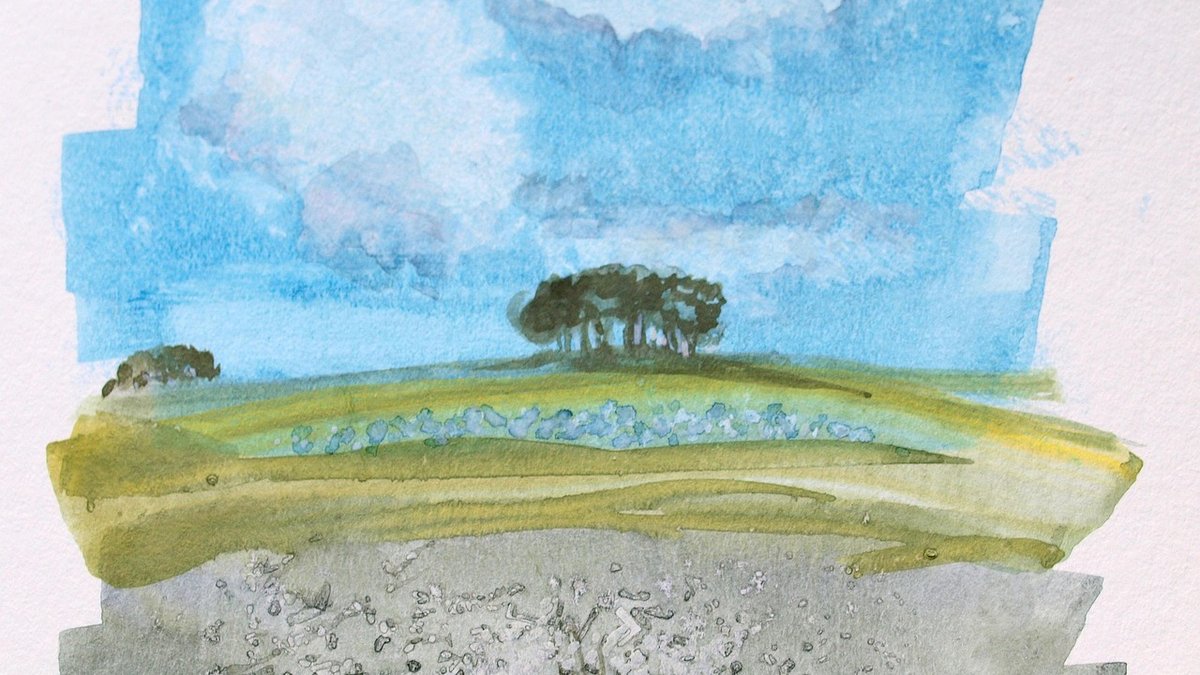
You know the feeling. You’ve sketched a promising stand of oaks, the light is dappling through the canopy, and then you reach for a tube of green. The result is flat, artificial, more like a plastic toy tree than the living woodland in front of you. The problem is not your brushwork. It is that no single tube of green can replicate the infinite variety of nature. Natural greens are built from blues, yellows and earth tones, each shift in light and moisture altering the mix. Once you understand how to combine these components, you gain control over every mossy stone, sunlit leaf and shadowed hollow.
Think of your palette as having three families of colour that work together to create believable greens. Blues provide depth, coolness and shadow. Yellows bring light, warmth and vibrancy. Earths mute, ground and unify. You do not need dozens of pigments. A handful of each will see you through most woodland scenes.
Now for the practical part. Here are specific combinations you can try on your next sketch. Remember that proportions matter more than exact measurements. Start with the yellow or blue, then adjust with earths until the colour feels right.
One more tip: never mix more than three pigments at once if you want to keep your greens clean. Muddy colour comes from overworking the palette, not from using earths.
Woodland greens change dramatically through the year and even through the day. In early spring, the palette is cool and delicate: think lemon yellow, cerulean and a whisper of raw umber. By midsummer, the greens deepen and warm up. Use cadmium yellow, ultramarine and yellow ochre for a fuller, heavier feel. Autumn brings burnt sienna and Venetian red into the mix, turning leaves towards orange and ochre. You can replicate this by adding more earth reds to your green base.
Light matters just as much. On an overcast day, greens appear cooler and more blue. Increase the proportion of ultramarine or cerulean. In bright sunshine, yellows dominate, so push your mixes towards lemon or cadmium. At dawn or dusk, add a touch of alizarin crimson or burnt sienna to suggest the warm glow. Always test your mix on a scrap of paper before committing it to the painting. The colour on the palette is not the colour on the support.
Outdoor sketching is the best way to train your eye for natural greens. The constantly shifting light forces you to mix quickly and decisively. Here are a few practical habits to make the most of your time in the field.
British weather adds its own challenges, but it also gives you the most beautiful, subtle greens. A soft, damp day in the Lake District or a Norfolk woodland will teach you more about muted, earthy mixes than any sunny afternoon. So pack your sketchbook, leave the tube greens at home, and start mixing. Your woodland scenes will thank you.

Hi, my name is Anthony kuber. I am artist and fashion designer.
I love to travel and writing blogging.
Your email address will not be published. Required fields are marked *
Software Developer & Writer
Hey, I'm Diva, a developer and writer blending code and creativity. I'm driven by a deep curiosity and a relentless pursuit of excellence. Join me as I craft digital solutions and captivating stories.


